.
.
kkalinkati | 22 de Abril de 2009
CLAUDIO VILLA
.
.
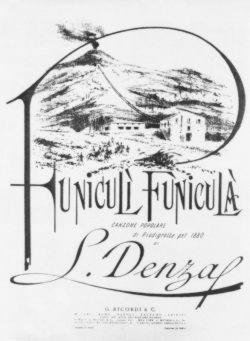
Funiculi ' funicula '
(music of Luigi Denza, text of Peppino Turco, 1880)
(music of Luigi Denza, text of Peppino Turco, 1880)
The song was written by journalist Peppino Turco and was set by Luigi Denza in 1880. They drew the inspiration from the inauguration of the first funicular of Mt.Vesuvius. They composed this music in few hours, and in spite of that the song met with success. The famous melody was sang the first time in the rooms of Quisisana Hotel in Castellammare di Stabia. Turco and Denza presented it to the Piedigrotta's day in the same year. The success roused contributed to diffuse Neapolitan song in the world and to recall a lot of tourists.
 |  |  |
 | Luigi Denza born on 24 February 1846 in Castellemmare di Stabia, Italy. He studied music under Saverio Mercadante and Paolo Serrao at the Naples Conservatory. After graduation, he began to compose opera music. In 1884, he moved to London to pursue his career as a composer. He was appointed Professor of singing at the Royal Academy of Music in 1898. He died in London on 27 January 1922 |
 | Peppino Turco born on 7 march 1846 and died on 14 October 1903 in naples, Italy. Initially he was a renowned journalist and poet, collaborating with the satirical newspaper Capitan Fracassa in Rome and various Neapolitan periodicals. However it is for his verses put to music that he is best known. He lived in Rome for much of his life. |
| Original text - Neapolitan dialect | English language text |
|
|
.http://www.vesuvioinrete.it/funicolare/e_funicolare_funiculi.htm
.
.
Funiculì, Funiculà
From Wikipedia, the free encyclopedia
| "Funiculì, Funiculà" ("Funiculì, Funiculà") | |
| Music by | Luigi Denza |
|---|---|
| Lyrics by | Peppino Turco |
| Published | 1880 |
| Language | Neapolitan |
| Performed by | Mario Lanza |
.
"Funiculì, Funiculà" is a famous song written by Italian journalist Peppino Turco and set to music by Italian composer Luigi Denza in 1880. It was composed to commemorate the opening of the first funicular cable car on Mount Vesuvius. The 1880 cable car was later destroyed by the eruption of Vesuvius in 1944. The song was sung for the first time in the Quisisana Hotel in Castellammare di Stabia and met with huge success. It was presented by Turco and Denza at the Piedigrotta festival during the same year. Edward Oxenford, an English songwriter and translator of libretti, published a version which became somewhat traditional in English-speaking countries.
Contents. |
Unintentional plagiarism
Six years after "Funiculì, Funiculà" was composed, German composer Richard Strauss heard the song while on a tour of Italy. Thinking that it was a traditional Italian folk song, he later incorporated it into his Aus Italien tone poem. Denza filed a lawsuit against Strauss and eventually won. Strauss was forced to pay him a royalty fee every time the Aus Italien was performed in public.
Original Neapolitan lyrics
Aieressera, oì Nanninè, me ne sagliette,
tu saie addò tu saie addò
Addò 'stu core 'ngrato cchiù dispietto
Farme nun pò!
Addò lo fuoco coce, ma si fuie
te lassa sta!
E nun te corre appriesso, nun te struie
sulo a guardà.
Jamme, jamme 'ncoppa, jamme jà,
funiculì, funiculà!
Nè, jamme da la terra a la montagna! no passo nc'è!
Se vede Francia, Proceta e la Spagna...
Io veco a tte!
Tirato co la fune, diritto 'nfatto,
'ncielo se va.
Se va comm' 'à lu viento a l'intrasatto, guè, saglie sà!
Jamme, jamme 'ncoppa, jamme jà,
funiculì, funiculà!
Se n' 'è sagliuta, oì Nè, se n' 'è sagliuta, la capa già!
È gghiuta, pò è turnata, pò è venuta,
sta sempe ccà!
La capa vota, vota, attuorno, attuorno,
attuorno a tte!
Sto core canta sempe
nu taluorno
Sposamme, oì Nè!
Jamme, jamme 'ncoppa, jamme jà,
funiculì, funiculà! [1]
tu saie addò tu saie addò
Addò 'stu core 'ngrato cchiù dispietto
Farme nun pò!
Addò lo fuoco coce, ma si fuie
te lassa sta!
E nun te corre appriesso, nun te struie
sulo a guardà.
Jamme, jamme 'ncoppa, jamme jà,
funiculì, funiculà!
Nè, jamme da la terra a la montagna! no passo nc'è!
Se vede Francia, Proceta e la Spagna...
Io veco a tte!
Tirato co la fune, diritto 'nfatto,
'ncielo se va.
Se va comm' 'à lu viento a l'intrasatto, guè, saglie sà!
Jamme, jamme 'ncoppa, jamme jà,
funiculì, funiculà!
Se n' 'è sagliuta, oì Nè, se n' 'è sagliuta, la capa già!
È gghiuta, pò è turnata, pò è venuta,
sta sempe ccà!
La capa vota, vota, attuorno, attuorno,
attuorno a tte!
Sto core canta sempe
nu taluorno
Sposamme, oì Nè!
Jamme, jamme 'ncoppa, jamme jà,
funiculì, funiculà! [1]
English translation
Yesterday evening, O Nannina [short for Carolina], I climbed up,
Do you know where?
To where an ungrateful heart can no longer vex me!
Where a fire is burning, but if you flee
It lets you be.
It doesn't chase you, doesn't melt you, with just one glance!
Let's go, let's go, let's go to the top,
Let's go, let's go, let's go to the top,
Funiculì, funiculà, funiculì, funiculà!
Let's go to the top, Funiculì, funiculà!
Let's go from here below up to the mountain, O Nannina, a step away!
You can see France, Procida, and Spain,
And I see you!
You rise, pulled by a cable, quick as a wink
into the sky.
We'll rise up like the wind all of a sudden knows how to do!
Let's go , let's go, let's go to the top,
Let's go, let's go, let's go to the top,
Funiculì, funiculà, funiculì, funiculà!
Let's go to the top, Funiculì, funiculà!
My brain has gone up there, O Nannina, has gone up there already!
It got there, turned around, and then returned:
It's always here!
My mind is turning, turning, around and round,
Encircling you!
This heart of mine is always singing
the same refrain:
"Marry me, O Nannina"!
Let's go, let's go, let's go to the top,
Let's go, let's go, let's go to the top,
Funiculì, funiculà, funiculì, funiculà!
Let's go to the top, Funiculì, funiculà![2]
Do you know where?
To where an ungrateful heart can no longer vex me!
Where a fire is burning, but if you flee
It lets you be.
It doesn't chase you, doesn't melt you, with just one glance!
Let's go, let's go, let's go to the top,
Let's go, let's go, let's go to the top,
Funiculì, funiculà, funiculì, funiculà!
Let's go to the top, Funiculì, funiculà!
Let's go from here below up to the mountain, O Nannina, a step away!
You can see France, Procida, and Spain,
And I see you!
You rise, pulled by a cable, quick as a wink
into the sky.
We'll rise up like the wind all of a sudden knows how to do!
Let's go , let's go, let's go to the top,
Let's go, let's go, let's go to the top,
Funiculì, funiculà, funiculì, funiculà!
Let's go to the top, Funiculì, funiculà!
My brain has gone up there, O Nannina, has gone up there already!
It got there, turned around, and then returned:
It's always here!
My mind is turning, turning, around and round,
Encircling you!
This heart of mine is always singing
the same refrain:
"Marry me, O Nannina"!
Let's go, let's go, let's go to the top,
Let's go, let's go, let's go to the top,
Funiculì, funiculà, funiculì, funiculà!
Let's go to the top, Funiculì, funiculà![2]
[edit] Traditional English lyrics

An English version of the song is subtitled "A Merry Life".[3]
.
.
Some think the world is made for fun and frolic,
And so do I! And so do I!
Some think it well to be all melancholic,
To pine and sigh; to pine and sigh;
But I, I love to spend my time in singing,
Some joyous song, some joyous song,
To set the air with music bravely ringing
Is far from wrong! Is far from wrong!
Listen, listen, echoes sound afar!
Listen, listen, echoes sound afar!
Funiculì, funiculà, funiculì, funiculà!
Echoes sound afar, funiculì, funiculà!
Ah me! 'tis strange that some should take to sighing,
And like it well! And like it well!
For me, I have not thought it worth the trying,
So cannot tell! So cannot tell!
With laugh, with dance and song the day soon passes
Full soon is gone, full soon is gone,
For mirth was made for joyous lads and lasses
To call their own! To call their own!
Listen, listen, hark the soft guitar!
Listen, listen, hark the soft guitar!
Funiculì, funiculà, funiculì, funiculà!
Hark the soft guitar, funiculì, funiculà![4]
And so do I! And so do I!
Some think it well to be all melancholic,
To pine and sigh; to pine and sigh;
But I, I love to spend my time in singing,
Some joyous song, some joyous song,
To set the air with music bravely ringing
Is far from wrong! Is far from wrong!
Listen, listen, echoes sound afar!
Listen, listen, echoes sound afar!
Funiculì, funiculà, funiculì, funiculà!
Echoes sound afar, funiculì, funiculà!
Ah me! 'tis strange that some should take to sighing,
And like it well! And like it well!
For me, I have not thought it worth the trying,
So cannot tell! So cannot tell!
With laugh, with dance and song the day soon passes
Full soon is gone, full soon is gone,
For mirth was made for joyous lads and lasses
To call their own! To call their own!
Listen, listen, hark the soft guitar!
Listen, listen, hark the soft guitar!
Funiculì, funiculà, funiculì, funiculà!
Hark the soft guitar, funiculì, funiculà![4]
References in popular culture
 | Lists of miscellaneous information should be avoided. Please relocate any relevant information into appropriate sections or articles. (October 2007) |
- "Funiculì, Funiculà" without lyrics was played as the theme music of the radio comedy soap opera Lorenzo Jones and his wife Belle which ran from 1937-1955 on various networks.
- A spoof was once made replacing the traditional lyrics with disparaging lyrics about school food.
- Another spoof was performed by Jewish cantor and parody artist Seymour Rockoff on "Rechnitzer Rejects, vol. 6", called "Shabbos Bei Dem Tish", with Yiddish lyrics poking fun at the singer's wife's frozen Sabbath food.
- "Funiculì, Funiculà" was a popular hit song performed by Mario Lanza in the 1950s. The melody is the same as the 1800s version, but the lyrics are in English and also changed to have a different theme, i.e. "Love is everywhere, funiculì, funiculà".
- Japanese musician and Yellow Magic Orchestra member Haruomi Hosono recorded a synthpop version of the song on his 1982 album Philharmony.
- The song can be heard in the horror film Street Trash.
- "Funiculì, Funiculà" is referenced in the song "Ferryboat Serenade" by the The Andrews Sisters
- The 1947 Disney cartoon "Mickey and the Beanstalk" uses the melody from "Funiculì, Funiculà" when Goofy and Donald Duck sing a song about food, including the words "I wanna eat 'n eat, 'n eat, 'n eat, 'n eat until I die" as the last line of the chorus.
- In 1974 Japanese anime cartoon "Little Meg Witch Girl/Majokko megu chan" by Toei Animation, Meg, his sister and his brother sing Funiculì Funiculà in Japanese language, when travelling with rack railway in the episode featuring a school mountain picnic.
- The Gipsy Kings song, "Que Sí, Que No" from their 1997 album Compas, uses the melody of "Funiculì, Funiculà".
- "Funiculì, Funiculà" is featured in the 1976 film, The Bad News Bears, along with songs from the opera Carmen.
- "Funiculì, Funiculà" is played by David Helfgott (Geoffrey Rush) in the 1996 film Shine.
- "Funiculì, Funiculà" is played during the closing credits of the 1998 film, Relax...It's Just Sex.
- In the 1983 film Easy Money, Rodney Dangerfield sings "Funiculì, Funiculà" (the English version) at his daughter's backyard wedding reception.
- In the 1994 film Heavenly Creatures, directed by Peter Jackson, the characters Pauline and Juliet are fans of Mario Lanza. In one scene, Pauline is making love to John the lodger and has a bizarre daydream to escape the moment. "Funiculì, Funiculà" is playing in the background.
- In Steve Barron's 1996 film, The Adventures of Pinocchio, Jerry Hadley performs the song with new lyrics as "Luigi's Welcome." The adaptation was written by Spencer Proffer, David Goldsmith, and Lee Holdridge.
- "Funiculì, Funiculà" can be heard in the "Puppy Love" levels of Earthworm Jim 2, a successful video game first released in 1995.
- The VeggieTales Classy Songs with Larry "Larry's High Silk Hat" uses the melody from "Funiculì, Funiculà". In the song, Larry the Cucumber sings about his two prized possessions: his top hat, and a box of chocolate candy from the two (2001) VeggieTales videos Lyle the Kindly Viking and The Ultimate Silly Song Countdown.
- The Decemberists' "Song for Myla Goldberg" from Her Majesty The Decemberists contains the lyrics: "Funiculì, funiculà, finiculì, finiculà. Funiculì, funiculà, funiculì, funiculà."
- The Ten Tenors erroneously attribute the song to Giuseppe Verdi on their album Tenology, as did an episode of Seinfeld.
- In the first episode of the animated series The Flintstones, Fred Flintstone and Barney Rubble sing "Funiculì, Funiculà" in the Flintstone Flyer on their way back home from the opera.
- The song is used as the introduction theme to Ren and Stimpy episode "Rubber Nipple Salesmen"
- "Funiculì, Funiculà" was Uncle Joe's (Edgar Buchanan) favorite song on the TV show Petticoat Junction (mentioned in at least two episodes).
- Topo Gigio and his entire family performed the song on an eisode of The Ed Sullivan Show.
- In a two-part "Disneyland" TV movie called Escapade in Florence, Annette Funicello sang a song called "Dream Boy" set to the "Funiculì, Funiculà" tune.
- Noel Coward's song "In a Bar on the Piccola Marina" includes the lines, "Funiculi, just fancy me, Funicula!" and "Funicula, Funiculi, funic yourself."
- A version called "City Till I Die (Funiculi Funicula)" by Jon Christos is on an album of Manchester City Football Club songs (2005, Sanctuary Records).
- Elaine and "The Maestro" sing "Funiculì, Funiculà" while driving in the Maestro's convertible in the 1995 episode of Seinfeld titled "The Maestro".
- Jerry Garcia of the Grateful Dead often played the easily recognizable notes to "Funiculì, Funiculà" during equipment problems at their shows beginning sometime in the mid-Seventies. A fine example of the tune can be found at Internet Archive
- A toy made by Fisher-Price called Pizza Party Elmo played the song used the melody from "Funiculì, Funiculà"[1]
- "Home To Mamma" sung by Patrizio Buanne used the melody from "Funiculì, Funiculà." It is included in his album The Italian.
- Folk music duo Cathy Fink & Marcy Marxer, joined by Texas polka/rock group Brave Combo, recorded the song on their 2001 album "All Wound Up: A Family Music Party."
- The traditional Japanese children's song "Oni no Pantsu" also uses the melody from "Funiculì, Funiculà." [2]
- A parody of the song entitled "The Telephone of Brazil," in which Placido Flamingo sang of his love for his telephone, appeared on Sesame Street in the 1970s. [3] The opera was performed as part of the "Live from the Nestropolitan Opera" series, hosted by Phil Harmonic.
- A rendition of the song was performed for The Grape Escape Game by Parker Brothers as a television selling strategy in 1992.
- A jingle for Doodle Dome in 1992 used the melody of the song.
- It is sung in Golden Boy (1939) by Lee J. Cobb, a young William Holden (his first role), Barbara Stanwyck, Sam Levene, Beatrice Blinn, & William H. Strauss at around 55 minutes into the film.
- In 1966, Christine Nelson used the tune in "Marvin," a novelty song about a frustrated mother and her misbehaving son.
- George Formby (Senior) recorded a parody of Funicula in 1907. Becoming very popular, at the time he later recorded a longer version entitled "Plink Plonk" in 1909.
- The Dutch pop duo, De Gebroeders Ko, used the melody in their 2007 song “Duiken in de zee”. YouTube video
- The Israeli political satire group, Latma, used the melody in their 2010 song “Three terrors”. YouTube video
- The song is featured in the novel "My Heart was Awake" which can be read on line here: http://myheartwasawake.blogspot.com/
References
- ^ See Russell Watson's Online lyrics
- ^ Translated with some help from the Storia di Napoli online dictionary and | Russell Watson's Online lyrics
- ^ *National Institutes of Health page with traditional English lyrics
- ^ Sheet music for Funiculì Funiculà (Loosely translation into standard Italian and traditional English version.
.
Para: Victor
Assunto: Bom descanso!
Data: 11/Jul 14:24
Beijos mil da Judite
.
.


